
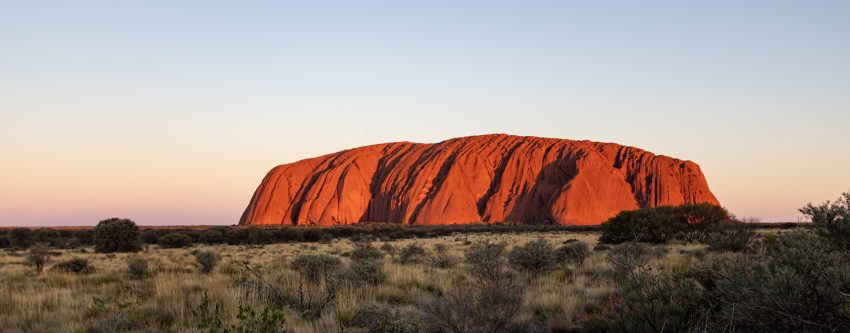
We love the extreme contrasts in Australia, and as we fly into Uluru from Sydney, passing countless miles of desert en route, this feels like it’s going to be a good one! This part of Australia is known as the Red Centre, home to one of the most iconic landmarks in the world.
This is the proper outback where only a 4×4 will do…
So obviously… we haven’t booked one!
Jenn has booked a four-wheel drive – close but no cigar! We upgrade at the airport, and I get the sense that we are going to be royally fleeced in this part of Oz. A limit of 400km applies, less than half of the mileage needed to get to Alice Springs and complete the Mereenie Loop. So we are facing a per mile surcharge. There is also mention of a cleaning fee and a charge for sat nav (although why you’d need one is beyond me – given that there’s only two directions of travel). Nevertheless, we are soon behind the wheel of a suitable Toyota.
It’s easy to see how the area got its name, with mile after mile of bright red desert.
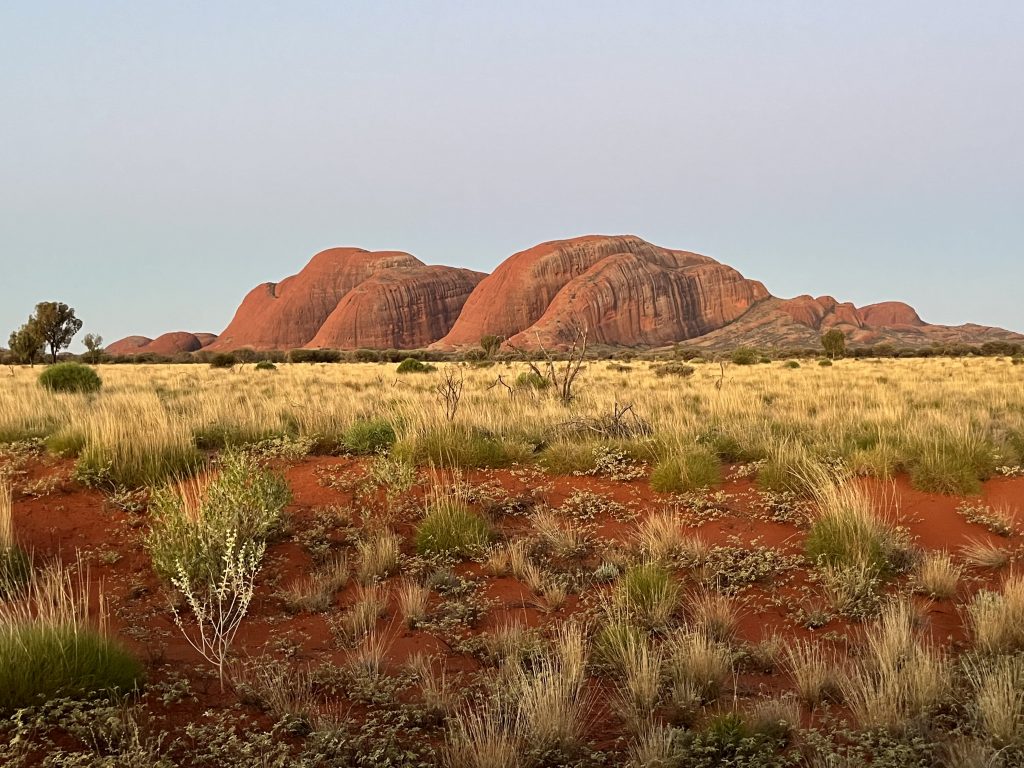
I had always been under the impression that Uluru, or Ayers Rock, rose out of nowhere and sat in splendid isolation. I was somewhat surprised therefore when we pass Kata Tjuta, a collection of bornhardts (dome shaped rock formations), shortly before arriving in Uluru.
Despite an early start that morning, we decide to make the most of our limited time in Uluru. Having dumped our bags, and stocked up on water, bananas and cereal bars (I’m told that this is authentic bush tucker) it’s straight back in the car to the Valley of the Winds. A 40 minute drive through the national park brings us to the foot of the impressive Kata Tjuta.
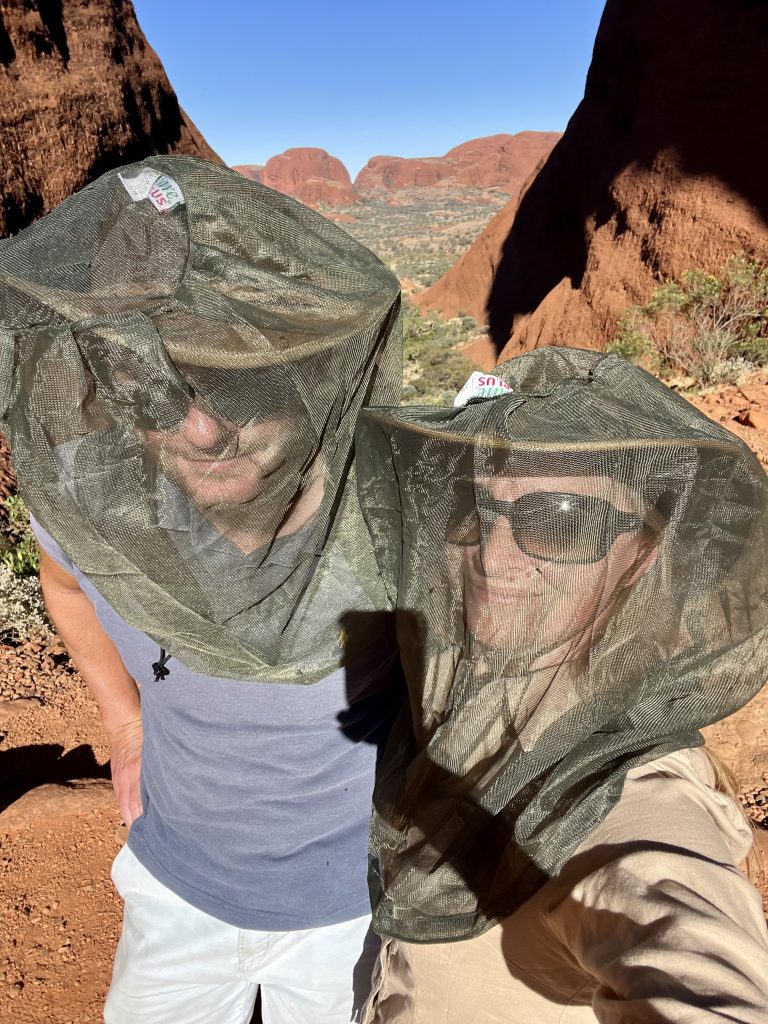
Before we travelled to Australia, I imagined red earth, heat, natural beauty, a myriad of lethal creatures, and a lots of flies. To date we have been blissfully free of the latter. The Red Centre however quickly redresses the balance. We’d encountered a few flies in Sydney, but nothing in comparison with Uluru. Within seconds of leaving the car, the flies arrive to greet us. Unlike flies in the UK, they are incredibly persistent, and seemingly nowhere is sacred to them!
I laughed at Jenn when she bought fly nets in preparation for our trip. However, despite being the least cool fashion accessory one can imagine – they quickly feel like a godsend.
There are seemingly two types of people in the outback, those who are too outdoorsy to wear a net, and those that are too urban to live without one. You can spot the former from a distance as they resemble a whirling dervish – arms flailing in a vain attempt to discourage the flies. The latter are also easily discerned from a distance, given that they resemble bee keepers.
Jenn and I quickly adopt a new outback persona. Quite the statement look!
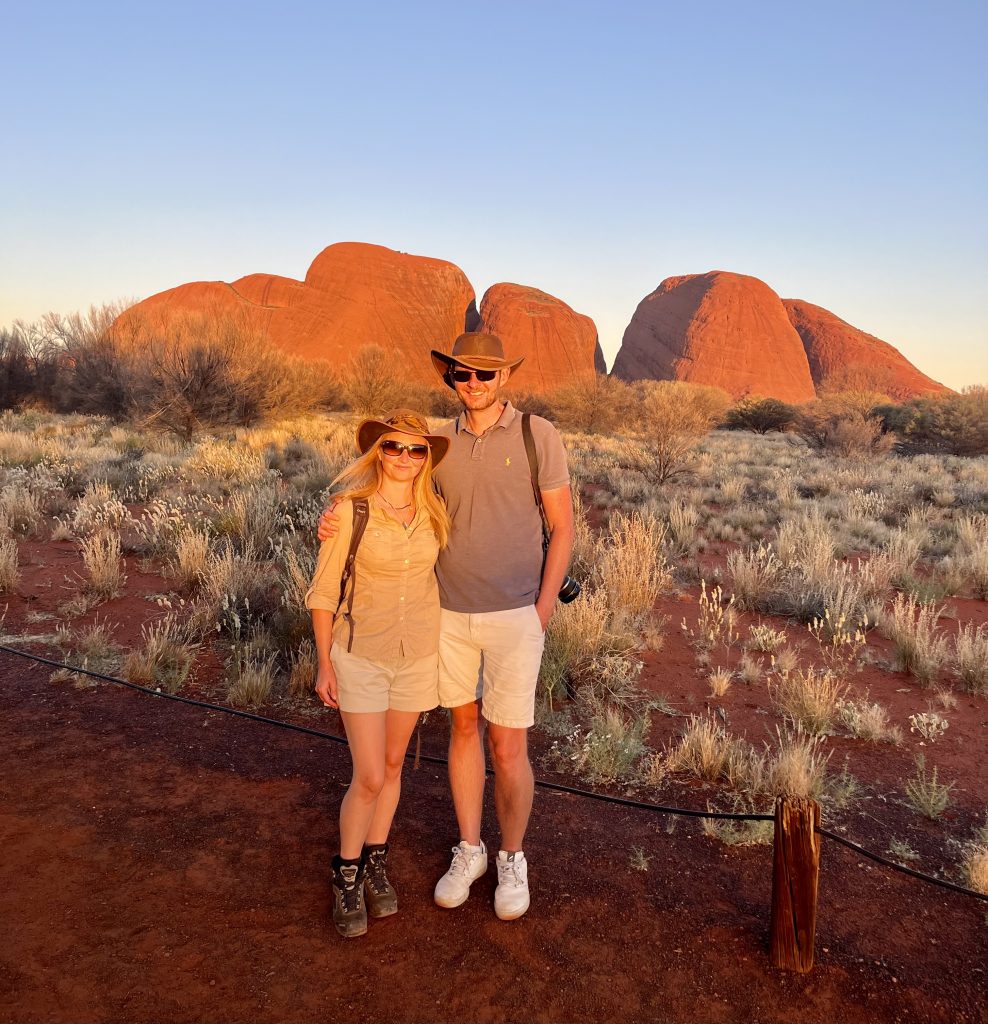
It’s mid-afternoon as we start our hike. The temperature is in the low thirties and exacerbated by the red rock. As such it is only suited to mad dogs and English men. It does however mean, that we have the place to ourselves. Despite walking for hours, we barely see another person. It’s a real treat to hike somewhere so remote and unspoilt. Like Uluru, the site is scared in the Anangu culture, and is still used in ceremonies.


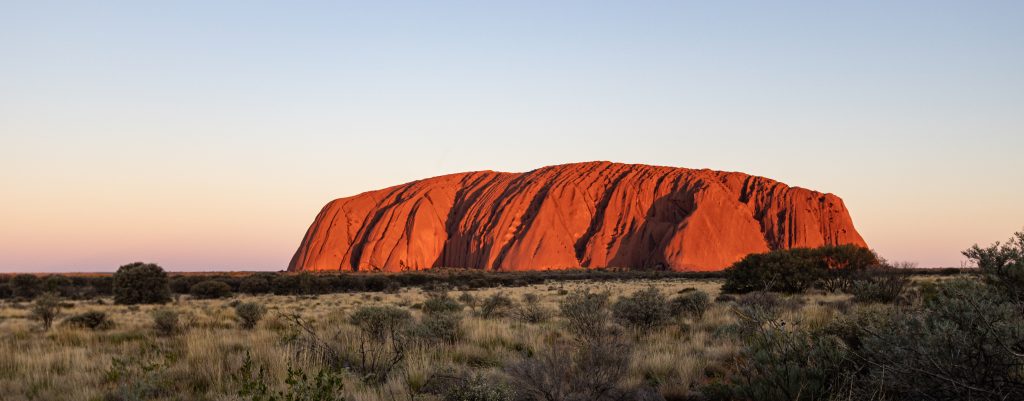
After walking the trail we drive to a second spot to watch the sunset. The colours are incredible – with the rocks turning bright orange before fading to brown shortly after the sun drops. As we drive home, it’s clear that the stars are going to be amazing out here.
The next morning we head back into the national park, this time to visit Uluru. We opt for a hike that takes us around the entire site. Uluru is 1,142 feet high and just under 10km in circumference. In respect to the traditional owners, photography is only permitted in certain spots, given that the rock formations and features play an important part in local mythology. It’s easy to see how the characterful monolith lends itself well to dreamtime storytelling. It’s impressive from a distance, but really stunning up close. The paintings are amongst the best we have seen.
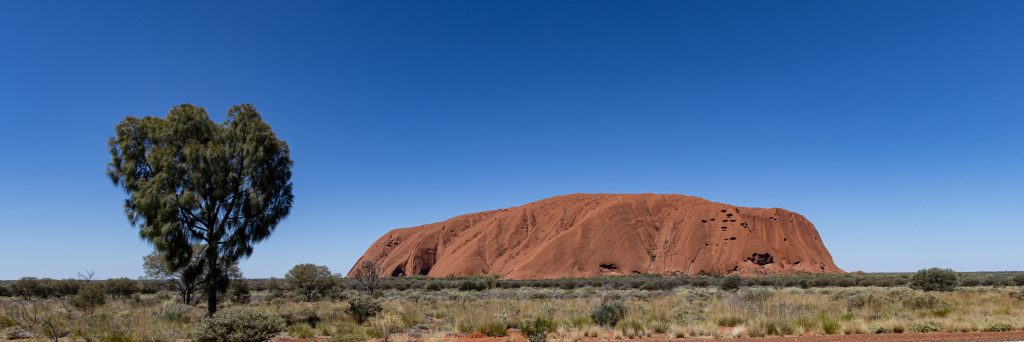


The accompanying cultural centre is a little underwhelming. Feels like a missed opportunity. Aboriginal culture is fascinating, but the film being shown and the artefacts on display, do little to bring it to life. Part of this may be attributable to the fact that the indigenous tribes have a largely oral history, or perhaps it is because they simply don’t want to share the intricacies of their culture with outsiders, but whatever the reason I’m slightly disappointed not to learn more about the spiritual side of Uluru.
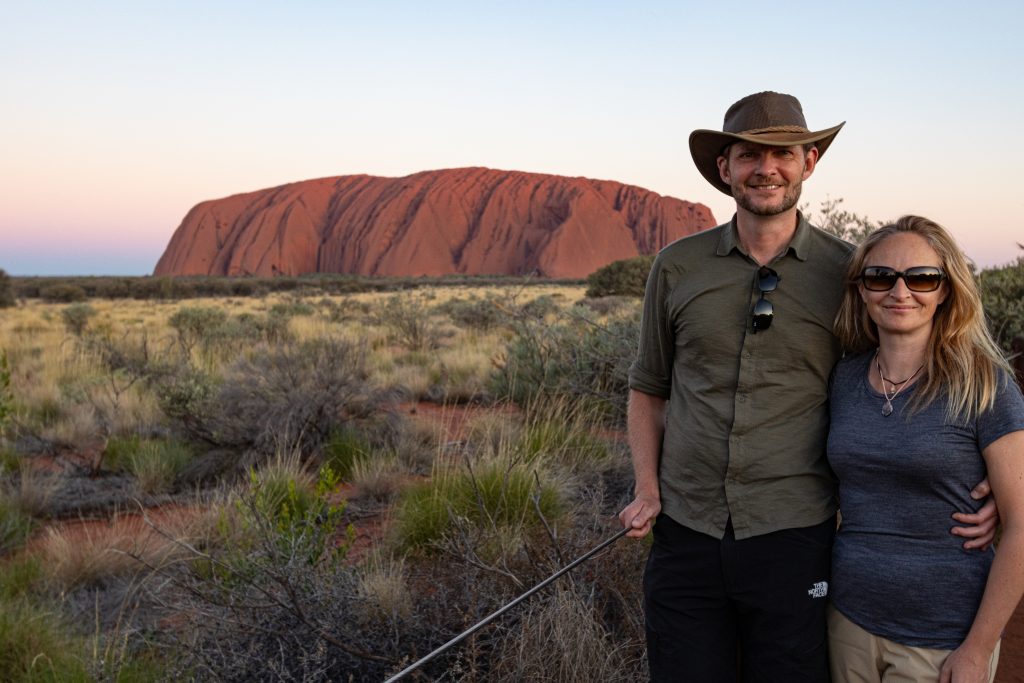
That afternoon we watch the sunset over the site. Again, amazing transformation, as the rock moves through a spectrum of red, orange, and brown hues.
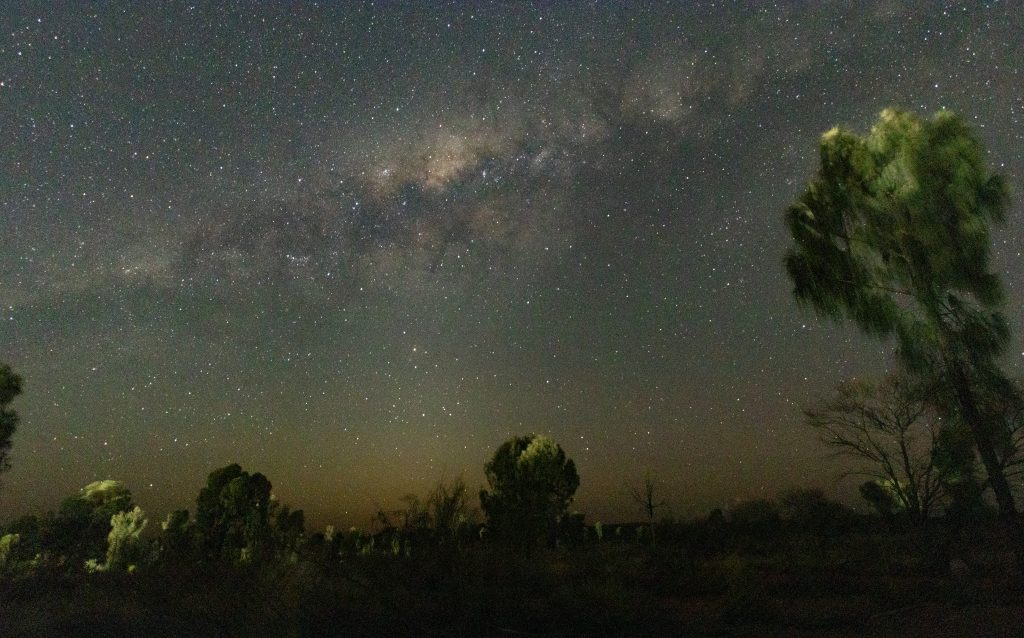
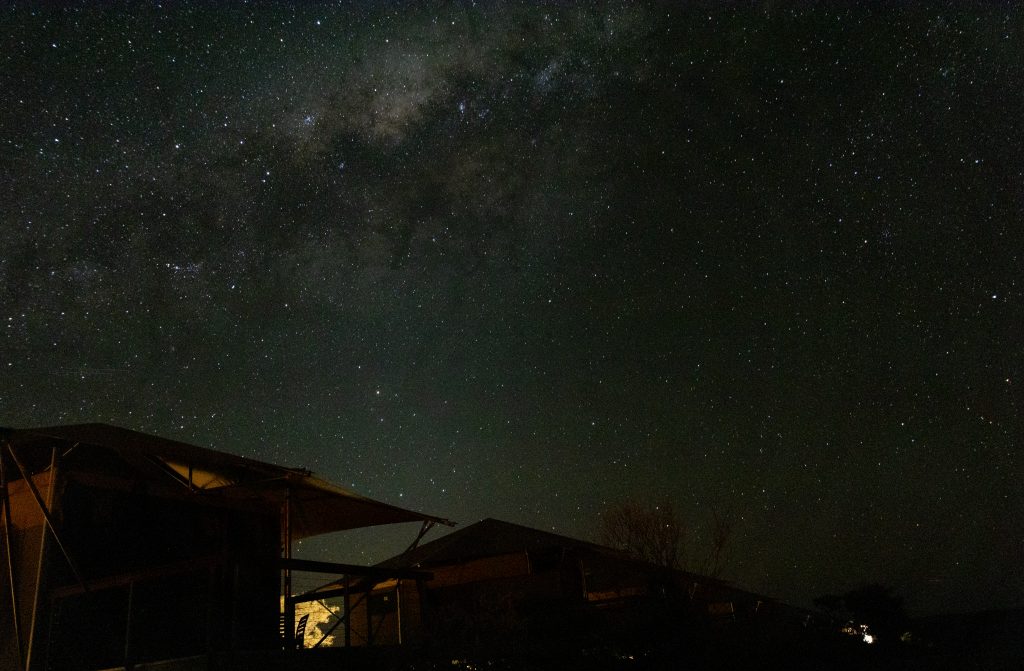
The evening sees us sat in the desert with an astral guide. The stars are pretty incredible, with the milky way clearly visible in a way that one rarely (if ever) sees in the UK. Scorpio is clearly visible, once pointed out, as is Saturn when seen through a high powered telescope. Our guide shares aboriginal stories about the constellations, which makes for an interesting twist. An experience that leaves one feeling very inconsequential, but in a very positive way.
Next day we drive for nearly 4 hours to Kings Canyon. We pass through a million acre cattle ranch, but otherwise, it is a long drive through endless scrub.
Our home for the night is Kings Creek Station. Our tent is located 5km away from the central site, and as we unlock the gate, I’m left wondering whether it is intended to keep us in or intruders out!
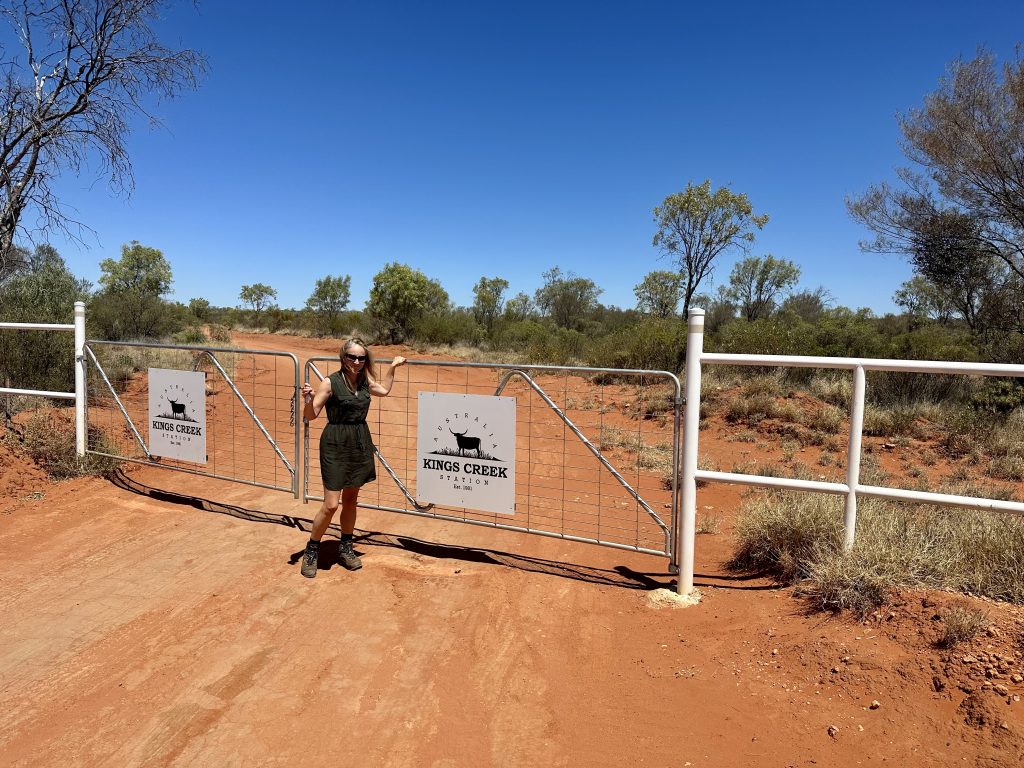
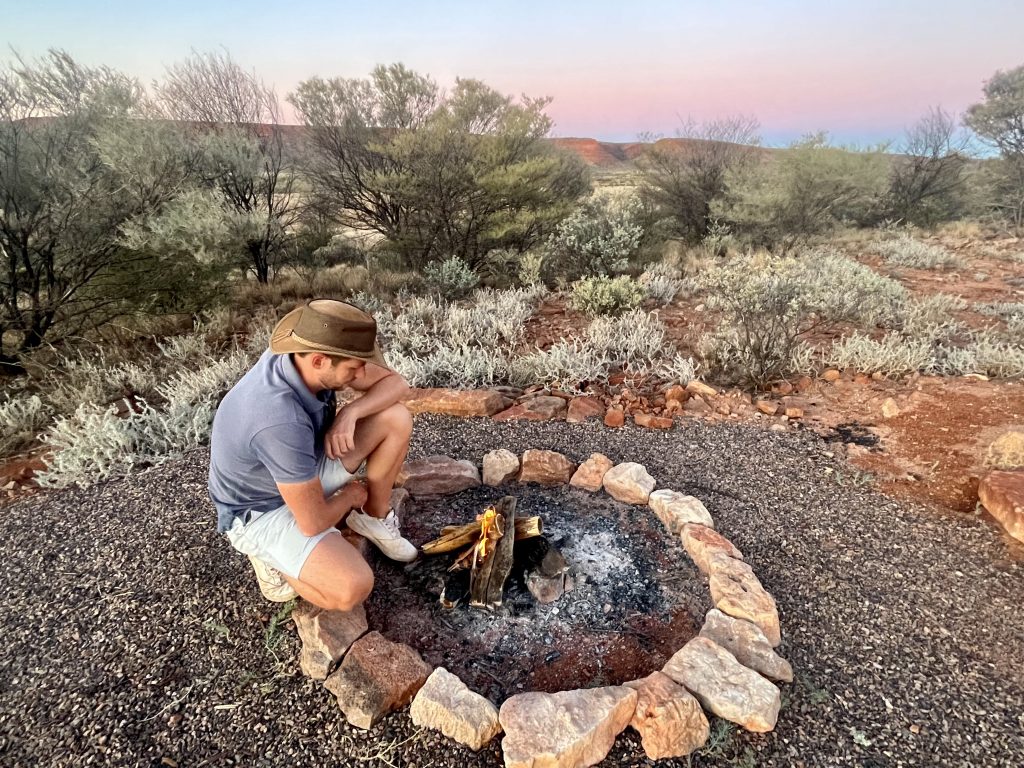
Our tent is set high up on a plateau overlooking an incredible escarpment. There are no other cars in the camp, and despite another 9 or so tents, we are once again on our lonesome. It’s a very cool set-up. All mod cons, dinner waiting to be cooked on the barbecue, a bottle of red, and a fire pit. It is gorgeous. Other than a few birds and the occasional lizard, it’s just the two of us.


We light the fire as the last of the suns rays fade and the stars start to appear. We are still the only ones in the camp and it is clear that we are spending the night in splendid isolation.
The stars are even better than in Uluru, given that there is almost no light pollution. A few outdoor lamps marking the neighbouring tents and our camp fire are the only lights for miles. One of the nicest evenings I can remember.
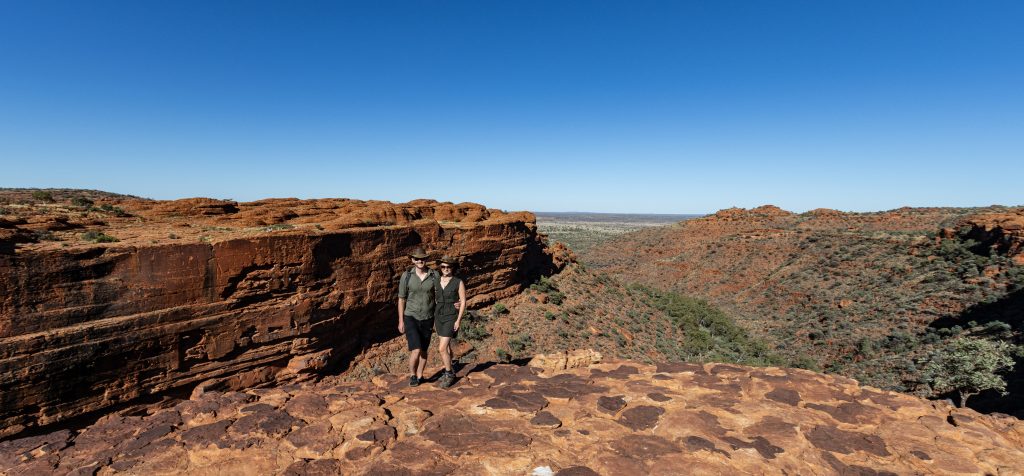
Next morning we are up at 6am so that we can hit the trail at Kings Canyon by no later than 7am. The hike starts with a steep ascent, which at that time in the morning, feels a little harsh. Nevertheless, the view is worth it. Stunning scenery that reminds us of the Bungle Bungle range in Western Australia. Despite the heat and ruggedness of the area, it hides an aptly named Garden of Eden in the centre, with species of plant dating back to prehistoric times.


After a three hour walk its back in the car to start the infamous Mereenie Loop. The route will take us 400km through the Tjoritja/MacDonnell National Park to Alice Springs. It is a route that can only be driven in a 4×4 owing to the corrugations. The reward is an off-road track that shaves 200km off the tarmacked equivalent and enables one to stop at a number of rather stunning locations.
By the time we arrive in Alice Springs, we are well and truly knackered! We’ve barely stopped for 12 hours – but what a day!
The next morning we have another early start. The airport is still closed when we arrive for our flight to Adelaide. Another contrast awaits, from the Red Centre to the wine country, specifically Barossa.
Until next time.
As always stunning scenery.i am reading this as we are on our way to a very wet Lake District stunning scenery of a different sort!
Brilliant to see the stars without light pollution.
Amazing how the scenery is transformed by the sunset.